
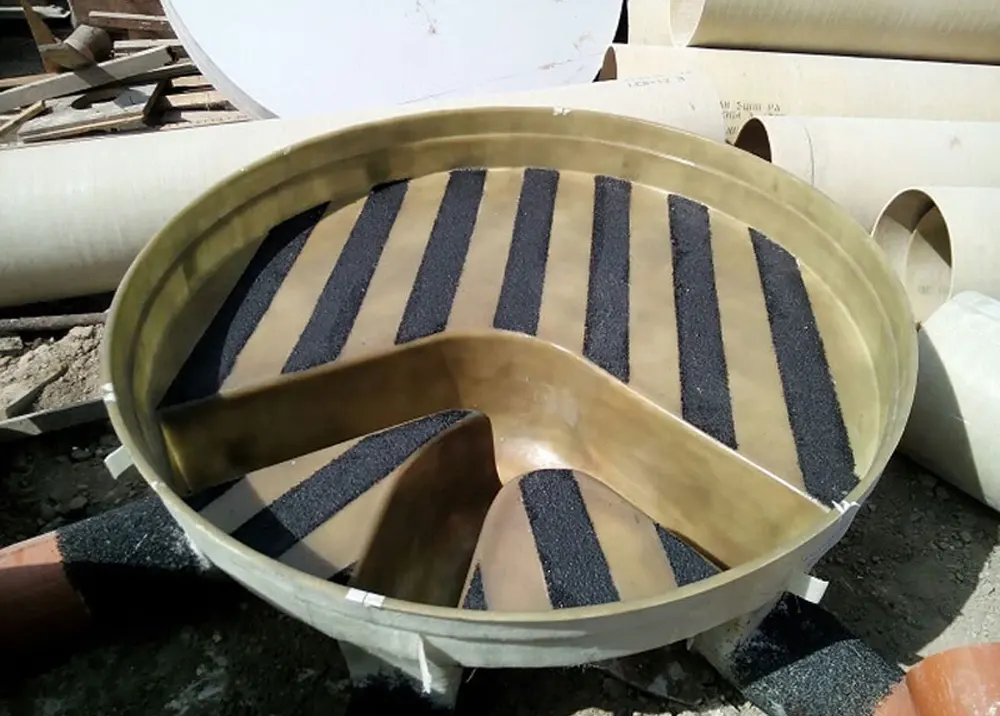
GRP In-situ & Benching Lamination
This methodology is adopted for the protection of the concrete Chambers, walls and tanks. The GRP in-situ lamination comes in various thicknesses and material specifications depending on the project requirements and Municipality standards.
GRP In-situ Lamination Process
Integral Pipeline follows controlled application procedures to ensure long-lasting performance:
Surface inspection, grinding, and cleaning of concrete
Repair of cracks, voids, and damaged areas
Application of primer and resin system
Lamination using resin-impregnated glass fiber layers
Formation of benching profiles as per design
Controlled curing and final inspection
All works are executed in accordance with approved drawings, material specifications, and municipal guidelines.
Applications of GRP In-situ & Benching Lamination
This service is ideal for:
Sewer manholes and inspection chambers
Concrete sumps and pump chambers
Underground tanks and water chambers
Industrial drainage structures
Chemical and wastewater facilities
Advantages of GRP In-situ Lamination
Excellent corrosion and chemical resistance
Seamless and joint-free lining system
Improves durability of concrete structures
Custom thickness based on project needs
Complies with municipality and authority standards
Long service life with minimal maintenance
Why Choose Integral Pipeline?
Expertise in FRP pipeline jointing systems
Skilled installation teams
Compliance with international standards
Proven experience in buried pipeline projects
Reliable and cost-effective execution
Integral Pipeline delivers safe, durable, and efficient jointing solutions for demanding pipeline applications.
GRP In-situ Lamination is an on-site application of glass fiber reinforced plastic layers over prepared concrete surfaces to protect chambers, walls, and tanks from corrosion, chemical attack, and water ingress.
Benching lamination is commonly used inside sewer manholes, inspection chambers, sumps, and drainage structures to improve flow characteristics and protect concrete surfaces.
The lamination thickness and material specification are selected based on project requirements, exposure conditions, and applicable municipality or authority standards.